To fully understand this law, it’s essential to learn about the different types of window tinting.
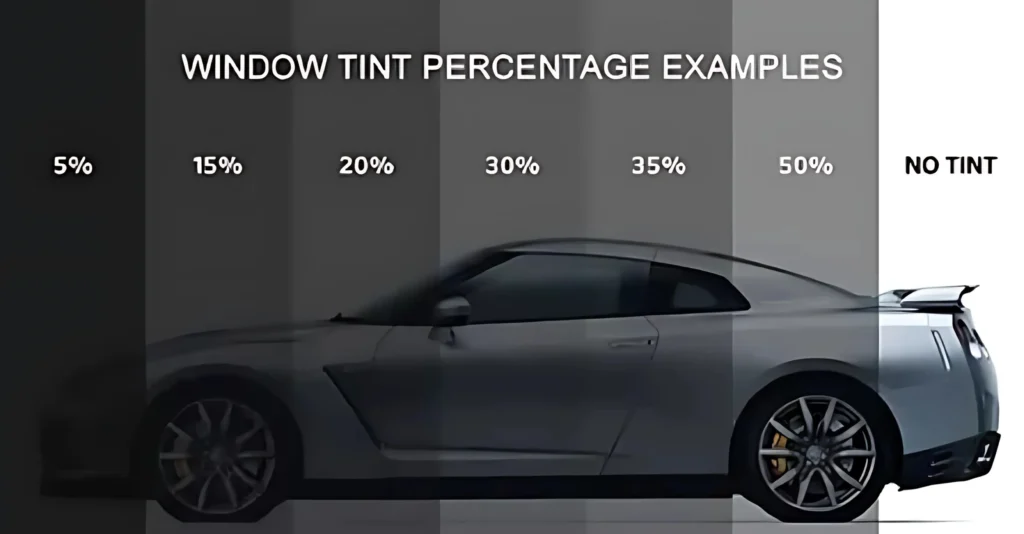
Different types of tint percentages
70% Tint (Light Tint)
-
Description: This is the lightest tint, allowing 70% of visible light to pass through the window.
-
Effect: Provides a slight reduction in glare and UV protection without significantly affecting visibility.
-
Common Use: Often used on windshields or in states with strict tint laws. It’s also a popular choice for those who want to reduce heat and UV exposure while maintaining a clear view of the outside.
-
Compliance: This tint percentage is usually legal in most states, as it allows enough light to pass through.
50% Tint (Medium-Light Tint)
-
Description: Allows 50% of visible light to pass through the window, providing moderate tint.
-
Effect: Offers a balance between UV protection, heat reduction, and visibility. It helps reduce glare but still allows good visibility, making it a popular option for front side windows.
-
Common Use: Common for the driver’s side and passenger side windows in areas where slightly darker tints are allowed.
3. 35% Tint (Medium Tint)
-
**Description: **Allows 35% of visible light to pass through the window.
-
Effect: Provides a noticeable reduction in glare and heat, offering more privacy while still ensuring adequate visibility from inside the vehicle.
-
**Common Use: **This is a popular choice for back windows and rear side windows for privacy and protection against UV rays.
-
Compliance: Many states allow 35% tint on rear windows, but front windows may have stricter regulations.
20% Tint (Dark Tint)
-
**Description: **Allows 20% of visible light to pass through, making it one of the darker tints available.
-
**Effect: **Provides significant privacy, reduces heat, and blocks a higher percentage of UV rays. However, it can significantly reduce visibility, especially at night.
-
**Common Use: **Often used on rear windows or for those who prioritize privacy and aesthetic appearance.
-
Compliance: Many states have restrictions on using such dark tint on the front windows, as it can impair visibility.
5% Tint (Limo Tint)
-
**Description: **This is the darkest tint, allowing only 5% of visible light to pass through.
-
Effect: Offers maximum privacy and UV protection but drastically reduces visibility, especially at night. It’s commonly used in limousines or vehicles requiring high levels of privacy.
-
Common Use: Typically applied to rear windows or for show cars and limousines. Not recommended for front windows due to visibility concerns.
-
Compliance: This is generally illegal on front side windows and windshields in many states, but may be allowed on rear and back windows.
Choosing the Right Tint for Your Car
**When selecting the right tint percentage for your car, consider the following factors:**-
-
State Laws: Always check your local window tint laws to ensure your tint percentage is legal. Laws can vary significantly depending on the state and even the city.
-
**Visibility and Safety: **Ensure that your tint percentage doesn’t impair your ability to drive safely, especially at night.
-
Privacy and Protection: Choose a tint that balances privacy, UV protection, and heat reduction according to your needs.
-
legal tint for windshield ** ** **Tint Allowed:** Non-reflective tint is permitted only on the AS-1 line or the top 5 inches of the windshield. Legal Tint for Front Side Windows ** ** **Tint Allowed:** Must allow more than 35% of light to pass through. Legal tint for Back Side Windows ** ** **Tint Allowed:** Any darkness level is permitted. Legal tint for Rear Window ** ** **Tint Allowed:** Any darkness level is permitted. Legal tint for Restricted Tint Colors ** ** **Prohibited Colors:** Red, yellow, and amber tints are not legal. Legal tint for Reflective tint ** ** **Prohibition:** Tints with a metallic or mirrored appearance are not allowed. legal tint for Side Mirrors ** ** **Requirement:** If the rear window is tinted, dual side mirrors are required. Legal tint for Medical Exemptions ** ** **Eligibility:** Individuals with medical conditions requiring sun protection can apply for a waiver. A written certification from a licensed Maryland physician is necessary. Legal tint for Penalties for Non-Compliance ** ** **Consequences:** Violations can result in a Safety Equipment Repair Order (SERO), requiring correction within 10 days and certification within 30 days. Failure to comply may lead to fines. Manufacturer Certification ** ** -
Requirement: Window tint manufacturers must certify that their products are in Maryland. It’s advisable to ensure your installer uses certified films.
Best tint shop in Maryland
We provide the [best car tinting services in Maryland](https://wildwrapz.com/window-tinting-in-maryland/), ensuring quality and compliance with state laws. Our services are easily accessible from the following areas:You can visit us from these nearby locations:
Youtube video for our services